Intralogistics blog: trends, tips and best practices
Actionable ideas for operations, logistics and supply chain managers. On the DEVA blog we share trends, best practices and lessons learned from transforming warehouses and distribution centers in Mexico.
-
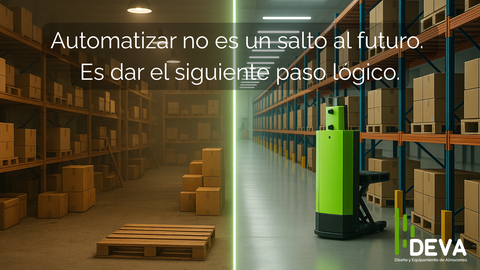
Can your company survive without automating its warehouse in the new industrial era?
Mexico is going through a historic moment. Nearshoring has put the country in the sights of global companies looking to relocate their production close to the United States, and our territory has become a natural magnet for that investment. At the same time, e-commerce keeps growing at a rapid pace, completely changing the rules of the game for delivery times, order accuracy and logistics costs.
-
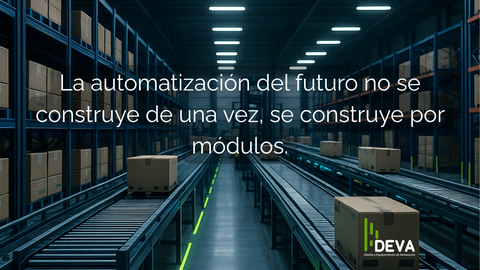
The evolution of intralogistics: why flexible automation is gaining ground in Mexico
In recent years, Mexico has established itself as a key point in the global supply chain. The USMCA (T-MEC), the push of nearshoring and the boom in e-commerce have redefined the rules of the game for logistics in the country. But with all that came new pressure: more orders, shorter delivery windows and a growing need for efficiency.
-
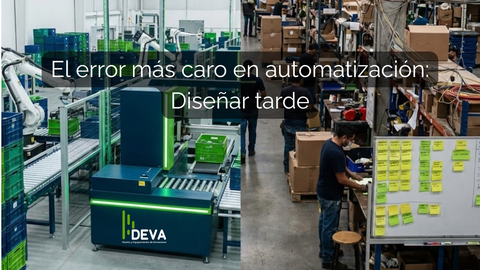
Common mistakes in automation projects (and how to avoid them from the design stage)
Automation promises what every operation is looking for: higher throughput, fewer errors, a better service level, less dependence on labor and more predictable execution. On paper, everything adds up. On the floor, not always.
-
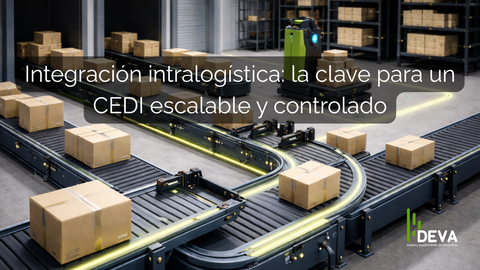
DEVA: intralogistics integration so your distribution center works as a system (not as “islands”)
At DEVA we see the same pattern repeat itself in many distribution centers: the facility grows, demand rises, SKUs multiply… and the operation starts to feel “stretched”. One day the bottleneck is in picking, the next in packing, and when the peaks arrive, the pressure goes straight to the docks and dispatch. That is usually when the temptation appears to “buy a solution” to put out the fire.
-
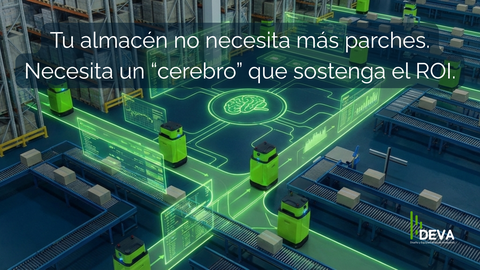
Artificial Intelligence in Intralogistics: From "Passive Steel" to Cognitive Automation
In today's supply chain context in Mexico, driven by nearshoring and unprecedented omnichannel demand, conventional automation of distribution centers has reached a natural limit. For years, the industry focused on deploying physical infrastructure (conveyors, pallet flow racking and sortation systems) as the definitive solution. However, in the era of volatility, "steel" alone is no longer enough. The real competitive differentiator today does not lie in the speed of the hardware but in the intelligence that orchestrates the movement.
-
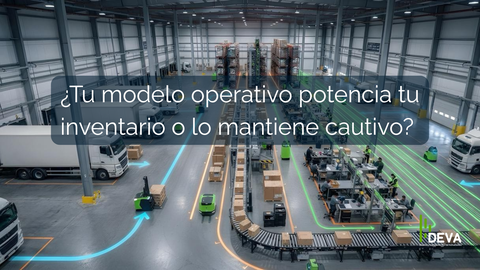
From static warehouse to profitable flow: Why stock is not enough
In the logistics sector, a full warehouse is usually read as a guarantee of service. However, from a strategic and financial perspective, idle inventory can actually be a symptom of inefficiency. Real profitability does not lie in how much stock you hold, but in how nimbly that capital flows through the operation.
-
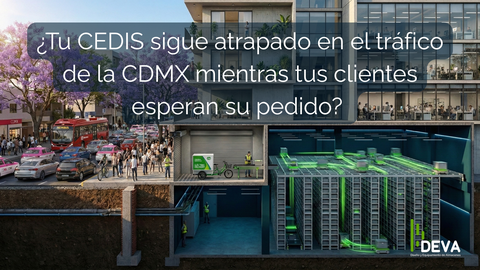
A distribution center fits in a parking lot (and why it's your only way out in 2026)
Let's be honest: trying to keep the "same-day delivery" promise in Mexico City while operating exclusively from the mega industrial parks of Cuautitlán, Tepotzotlán or Tultitlán has become a suicide mission for operating margins.
-
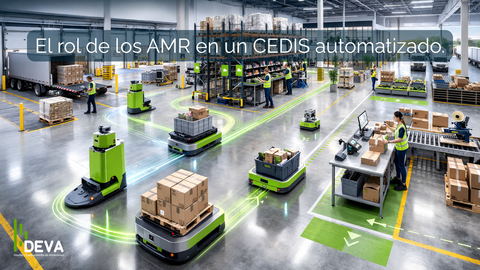
AMRs in the Distribution Center: The Practical Guide to Transforming Your Warehouse with Autonomous Mobile Robots
In Mexico, running a distribution center today means constant pressure: deliver faster, with fewer errors and with controlled costs. The growth of e-commerce, the expectation of ever-faster deliveries and the push of nearshoring have raised the bar for logistics operations. It is no longer enough to “get the work out”; now it has to be done with precision, visibility and continuity.
-
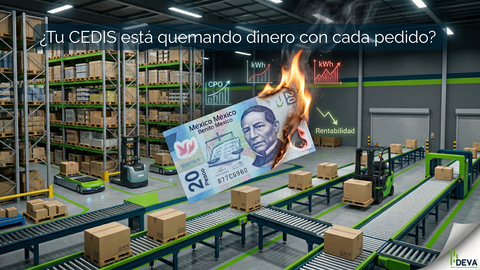
The Hidden Cost Eroding Your Distribution Center's Profitability: The Electricity Bill Is Now a Competitiveness Problem
Imagine that every time your distribution center processes an order, someone is setting fire to a 20-peso bill and letting it burn away. Nobody sees it. It is not on the income statement as a separate line. But it is there, diluting your operating margin month after month.
-
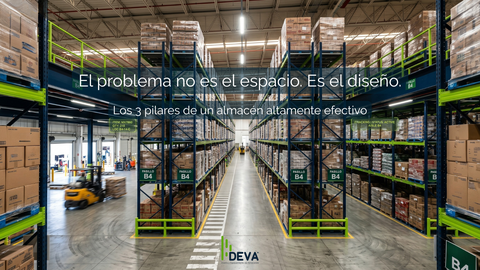
The 3 pillars of a highly effective warehouse
Want to double the efficiency of your distribution center? Start with these 3 pillars.
-
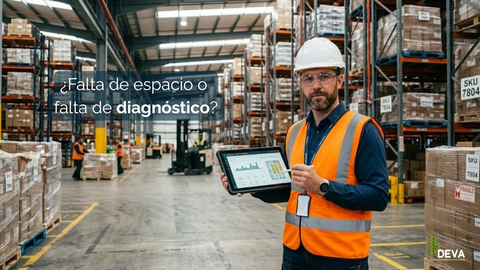
Operational Diagnosis: The Most Important Decision Before Investing in Your Warehouse
Before spending a single peso on new racking, state-of-the-art forklifts or complex automation systems, you need to understand exactly where money is being lost today. In the fast-paced world of intralogistics, the urgency to "grow" or "modernize" often clouds strategic reasoning. Many operations directors and supply chain managers fall into the trap of applying standard solutions to problems they have not even finished understanding.
-
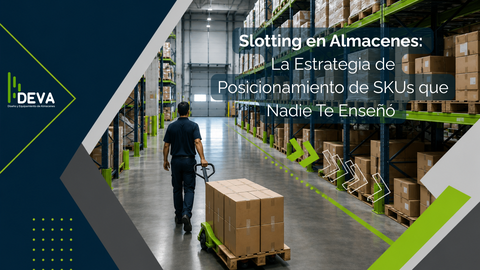
Warehouse Slotting: The SKU Positioning Strategy Nobody Taught You (But Your Operation Needs)
What is slotting, and why does nobody teach it well?
-
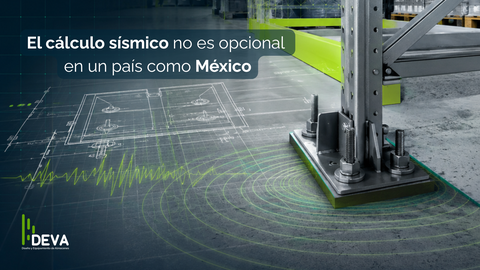
Seismic calculations for warehouses: what every operation in Mexico should know before installing a rack
The September 19, 2017 earthquake didn't just bring down buildings in Mexico City; it also exposed an uncomfortable truth for many industrial operations: a warehouse can look orderly, productive and profitable… until a seismic force tests everything that was never calculated.
-
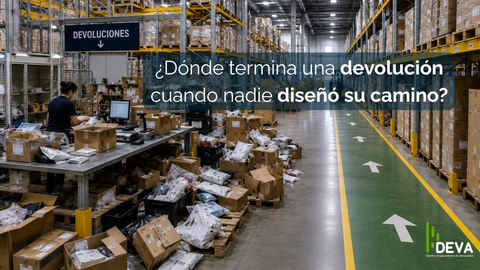
Returns Management (Reverse Logistics): The Process Mexican E-commerce Forgot to Design
Every return that enters your distribution center without a defined process contaminates your outbound operation. Do you have a zone and a flow to receive returns?
-
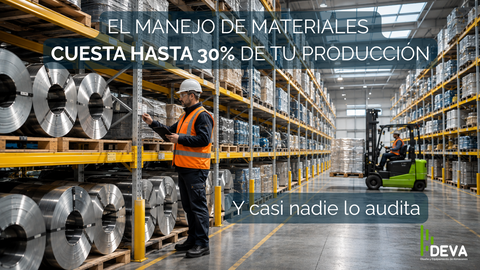
Material handling and the raw materials warehouse: the pair that defines your plant's efficiency
Chaos in a raw materials warehouse is not a space problem: it is a method problem. And the method is called material handling.
-
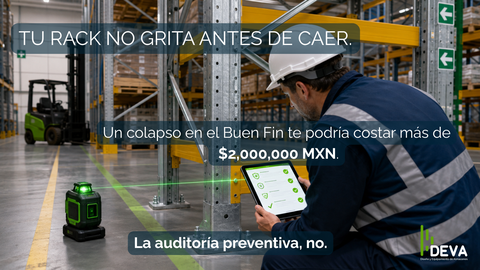
Rack Audits: When to Do Them, What to Look For and Why You Can't Let Them Slide in Peak Season
A damaged rack that collapses in peak season is not just an accident. It is the shutdown of your operation at the worst possible moment.
-
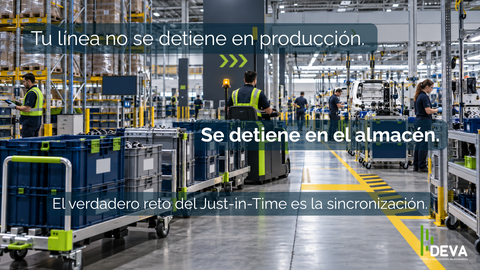
Just-in-Time manufacturing: when the warehouse decides whether the line runs or stops
In Just-in-Time manufacturing, the warehouse cannot become a bottleneck. Every minute that the right material fails to reach the point of use has a direct cost: idle operators, equipment not producing, disrupted sequences and delivery commitments at risk.
Ready to optimize your warehouse?
Talk with a DEVA expert and get a free personalized warehouse assessment.