A distribution center fits in a parking lot (and why it's your only way out in 2026)
Let's be honest: trying to keep the "same-day delivery" promise in Mexico City while operating exclusively from the mega industrial parks of Cuautitlán, Tepotzotlán or Tultitlán has become a suicide mission for operating margins.
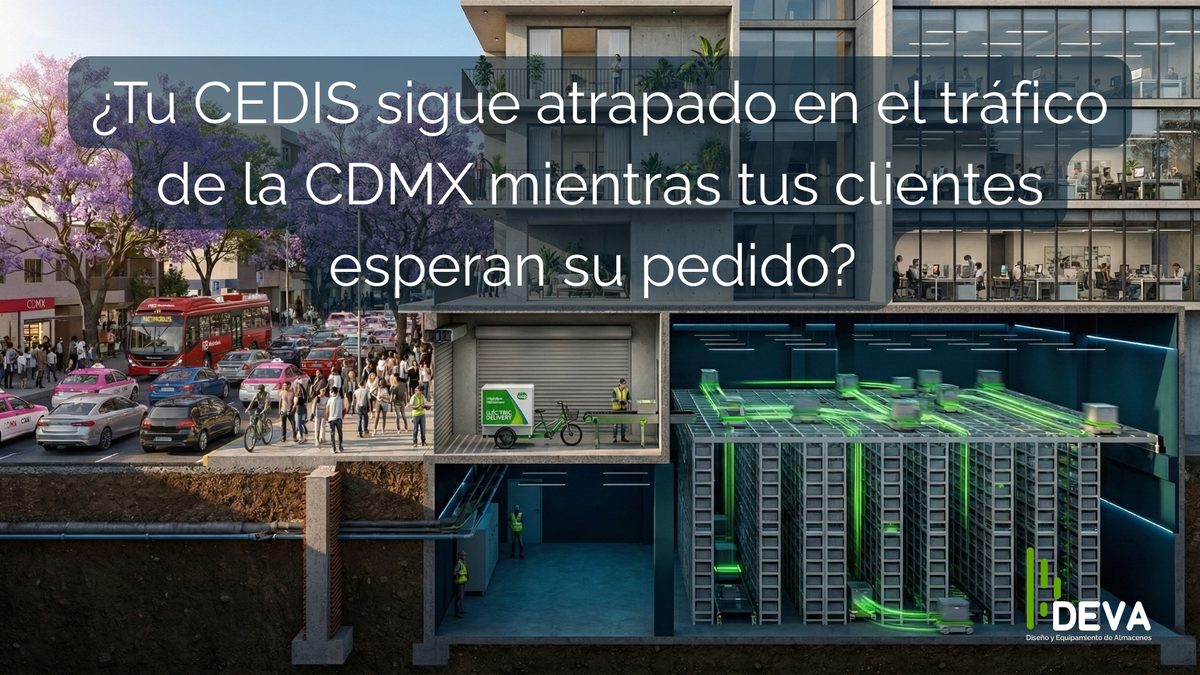
In 2026, Mexico City traffic has not improved, and the cost of fuel and of the fleet needed to cross the urban sprawl is eating into e-commerce profitability. The last mile is no longer the challenge; the challenge is the “last hour”.
This is where Micro-fulfillment stops being an “American fad” and becomes a survival necessity for retail and distribution in Mexico.
The problem is not space, it’s density
A square meter in areas like Del Valle, Polanco or even repurposed industrial zones like Vallejo is extremely expensive. Picturing a traditional distribution center with wide aisles and forklifts in these locations is financially unviable. The numbers just don’t add up.
But what happens if we change the equation?
The secret of urban Micro-fulfillment is not renting a huge warehouse building, but densifying a small space. We are talking about turning vacant retail units, basements of corporate buildings or small 500 m² neighborhood warehouses into logistics powerhouses.
Automation: The Logistics “Tetris”
This is where DEVA comes in. For a Micro-hub to work in Mexico City, we need to eliminate the air. Literally.
Modern automation (AutoStore systems, Shuttles or Vertical Lift Modules) allows us to:
- Operate vertically: Use 100% of 4- or 5-meter ceiling heights, eliminating forklift aisles. Where 1,000 SKUs used to fit on manual shelving, today we fit 10,000 in a high-density automated cube.
- Picking speed: In a Micro-fulfillment center (MFC), the worker doesn’t walk. The product goes to the person (Goods-to-Person). This drives productivity from 50 lines/hour to more than 300.
- Surgical accuracy: In tight spaces with high turnover, an inventory error is fatal. Automation guarantees 99.9% traceability, eliminating the stock “false positives” that so annoy the end consumer.
The new silent neighbor
There is one factor few people consider: noise. Operating a distribution center in a mixed-use (residential/commercial) zone requires stealth. Today’s automation systems are electric, quiet and clean.
This makes it possible to run night shifts for replenishment without violating the borough’s noise regulations, and to prepare the routes of the electric vans or cargo bikes that will head out at 7:00 AM to deliver within a 3 km radius.
The hub-and-spoke strategy
DEVA’s bet for this year is not just selling you “hardware”. It is helping you design a logistics network with deep distribution reach.
Imagine keeping your main distribution center in the State of Mexico for the bulk of your inventory (Class B and C), but moving your Top Movers (Class A) to three strategic points inside the Circuito Interior ring road, operated by compact automated systems.
The result: You drastically cut your secondary transportation costs, lower your carbon footprint and, most importantly, keep your 2-hour delivery promise to the customer without burning money.
Urban intralogistics is no longer the future. It is the present. And in a city where space is gold, automation is the only tool that lets you mine it.
At DEVA we analyze your order profile and design the density solution your operation needs. Let’s talk about real efficiency.
Ready to optimize your warehouse?
Talk with a DEVA expert and get a free personalized warehouse assessment.