From static warehouse to profitable flow: Why stock is not enough
In the logistics sector, a full warehouse is usually read as a guarantee of service. However, from a strategic and financial perspective, idle inventory can actually be a symptom of inefficiency. Real profitability does not lie in how much stock you hold, but in how nimbly that capital flows through the operation.
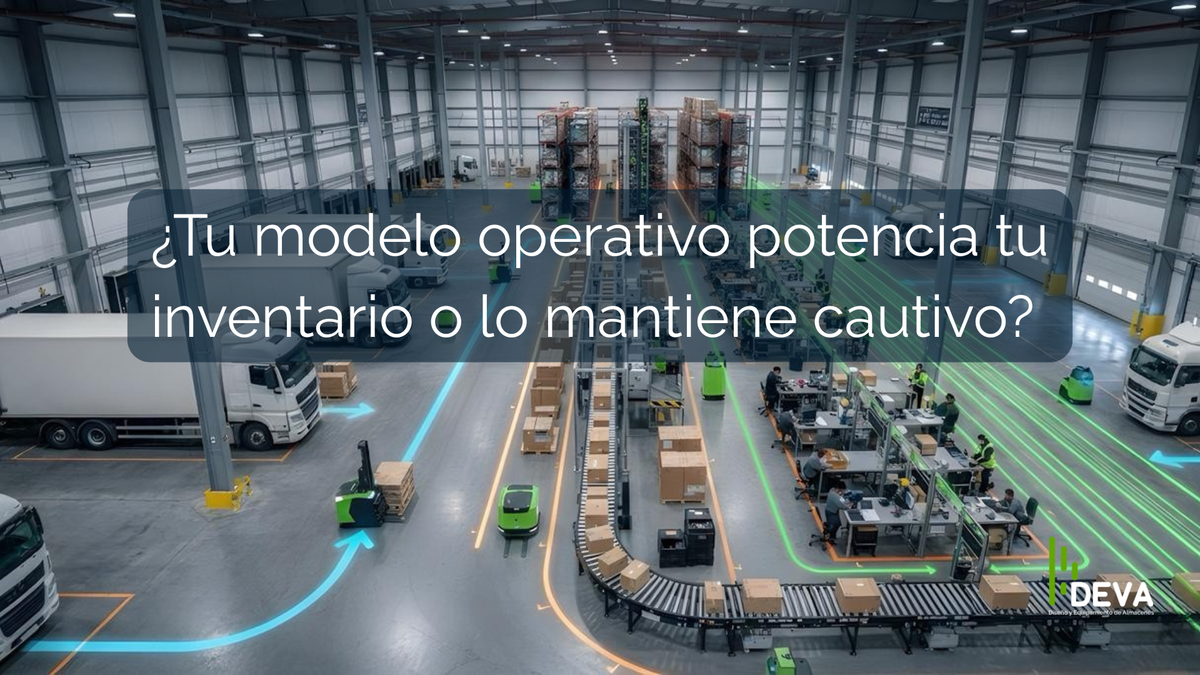
The pressure to optimize CAPEX and reduce OPEX is forcing operations leaders to look beyond the shelving. The real challenge is not storage capacity, but eliminating friction in three critical processes: cross-docking, picking and packing.
When these models are not aligned with the nature of the inventory, the operation starts “burning” resources on unnecessary moves, dispatch errors and tied-up capital.
Cross-docking: The strategy of speed
Cross-docking is perhaps the most powerful tool for improving inventory turnover, but also the most demanding. Its success does not depend on physical space, but on the accuracy of information.
- The impact: It drastically reduces tied-up capital and handling costs.
- The operational reality: It is only viable when demand is predictable and lead times are real. Running a cross-docking model with a poor forecast is a sure recipe for collapse at the loading docks. It is not a way to save space; it is a way to inject speed into cash flow.
Picking: The heart of accuracy and the P&L
If inventory is the asset, picking is the process that validates its value. An error at this stage is not just a wrongly shipped order; it is a discrepancy that drags along audits, shrinkage and a systemic loss of trust.
- Productivity per m²: Layout optimization based on criticality and turnover (ABC) is what separates a profitable operation from one that merely survives.
- Data versus physical stock: When there are differences between the stock in the system and the real stock, the problem is rarely the software; it is usually a poorly designed picking process that creates friction in every move the worker makes.
Packing: The last guardian of the margin
Packing is often perceived as a secondary step, but in practice it closes the inventory cycle. It is the operation’s last chance to make sure that what has been invested in picking is not lost along the way.
- Shrinkage control: Poor packing is the direct cause of reverse logistics, one of the biggest margin destroyers in retail and industry.
- Flow integrity: What leaves properly validated and protected is correctly deducted from the system. Packing ensures that the physical outflow and the accounting record go hand in hand.
Integrated management as a competitive advantage
Inventory defines the what and the how much, but cross-docking, picking and packing define how profitability flows. Managing these pillars as independent silos is one of the most costly mistakes in modern intralogistics.
To scale sustainably, the operational architecture must respond to the speed of the market. Technology must serve the flow, making sure that every square meter of the warehouse generates value instead of absorbing costs.
Is your current operating model designed to boost your inventory turnover, or is it acting as a bottleneck to your growth?
At DEVA we help companies turn their intralogistics into a profitability engine. Let’s talk about how to optimize the operational flow of your warehouse.
Ready to optimize your warehouse?
Talk with a DEVA expert and get a free personalized warehouse assessment.