Intralogistics Optimization by DEVA: Implementing Carton Flow and WMS for Premium Consumer Goods
The move to a new distribution center is a critical moment for any company, especially when it handles high-value, extremely fragile products. In this context, a major company in the sector decided to completely modernize its logistics infrastructure when it moved to a new facility, leaving obsolete equipment behind to ensure an efficient and safe operation.
Executive Summary
To achieve this, the company partnered with DEVA, which, after a consultative analysis of the business’s data and needs, proposed implementing a WMS together with a Carton Flow system. This solution made it possible to create deep reserves of cases, ensuring a continuous workflow and eliminating the bottlenecks associated with constant replenishment.
The project, marked by flawless logistics coordination and an installation with no operational interruptions, resulted in a substantial improvement in picking cycle times, reduced travel and, above all, complete protection of the packaging. This case study details how the integration of the right technology, together with a vision of scalability, transformed the client’s storage dynamics.
Introduction
In the competitive intralogistics and storage sector, DEVA positions itself not as a simple equipment supplier, but as an end-to-end solutions consultant. The company’s philosophy is to start from the data and real information of the client’s business to design storage architectures that meet its precise operational needs. In this project, DEVA showed how choosing the right software and hardware can be integrated harmoniously into a broader logistics modernization strategy.
The Challenge: Modernization and Product Care
The project arose from a structural milestone for the client: moving its operations from an old warehouse to a completely new one. Management was clear that migrating obsolete equipment to a state-of-the-art facility made no strategic sense. It needed new infrastructure that would deliver:
- Picking Agility: Eliminate the downtime caused by the constant need to replenish the order picking lines.
- Extreme Product Care: Because the items are extremely delicate, the integrity of the packaging is as crucial as the product itself. A damaged cardboard box translates into unacceptable shrinkage or direct damage to the goods.
- Alignment with New Technologies: The physical storage solution had to coexist with the acquisition of the WMS (Warehouse Management System).
The Solution: Implementing Carton Flow
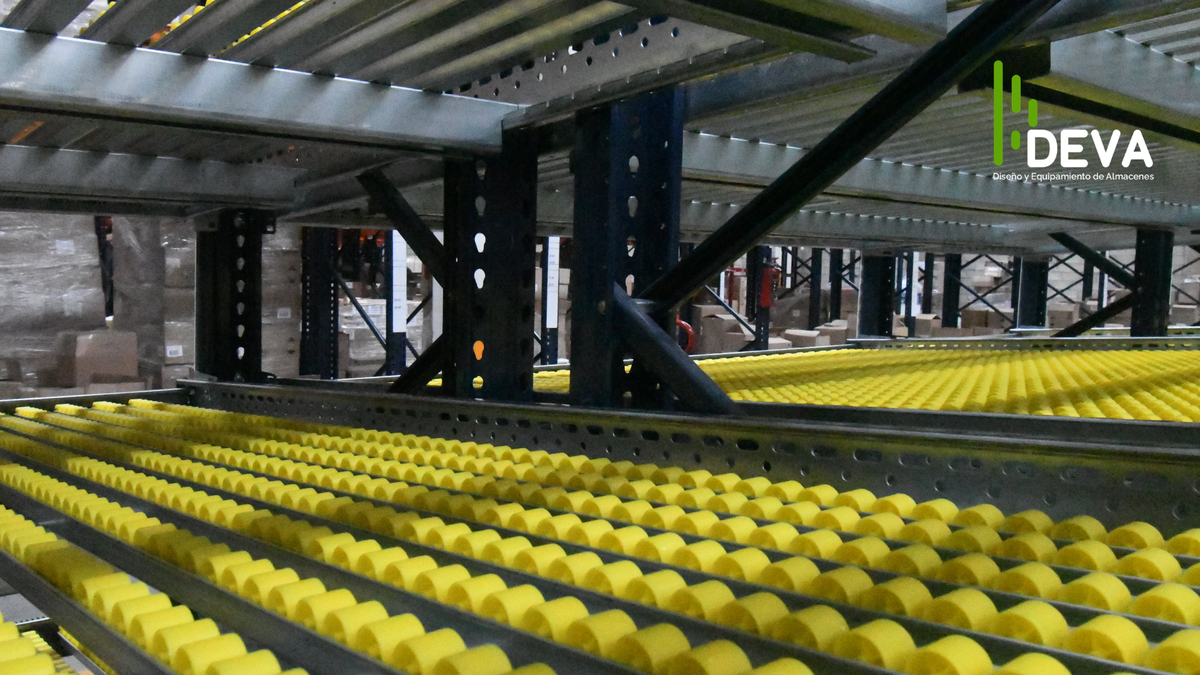
After the initial consulting phase, DEVA determined that the ideal solution was a Carton Flow system together with a WMS. The technology was selected for its ability to hold cases in reserve using the depth of the rack, allowing the product to slide by gravity toward the picking face.
The project was executed as follows:
- Engineering and Supply: The high-quality materials were imported directly from Germany by DEVA, ensuring durability and precision.
- Management and Coordination: The DEVA team managed the international supply chain (import and delivery) and worked in close communication with the client’s Project Manager to align timelines.
- Independent Integration: The implementation of the WMS software was managed, and the physical hardware was supplied to operate in step with the location logic dictated by that system.
- Confined Installation: To minimize any impact on daily operations, the installation area was strictly confined at the client’s request. The system was not released for use until it was 100% configured and tested, ensuring zero friction with the rest of the warehouse activities.
Results and Success Metrics
Adopting the WMS and Carton Flow system had an immediate positive impact on the client’s Key Performance Indicators (KPIs), with both qualitative and operational benefits:
- Reduced Times and Travel: Workers’ travel distances were significantly minimized, achieving much faster access to SKUs (Stock Keeping Units).
- Zero Replenishment Stoppages: Deep reserve storage enabled continuous picking. Order pickers no longer have to stop working while they wait for the forklift teams to replenish the rack face.
- Handling Shrinkage Reduced to 0%: The controlled, smooth sliding of the Carton Flow prevented breakage and damage to the cases, protecting the items inside and preserving the premium presentation demanded by the end consumer.
Obstacles Overcome
Unlike implementations where the hardware puts up resistance, the main challenge of this project was logistical and a matter of time management. Importing structures from Germany required impeccable synchronization with the new distribution center’s schedule.
On the technical side, the high quality of the material (“a truly first-rate material,” in the words of DEVA’s expert) made assembly much easier. Success came from strictly delimiting the work area, which avoided the classic problem of interference between the installation crews and the warehouse workers.
Lessons Learned and Recommendations
DEVA’s expert shares key lessons for any Director of Operations evaluating this type of solution:
- Critical Component Selection: It is vital to choose the right roller type for the Carton Flow. This decision must be based strictly on the packaging type, weight and handling requirements of the specific product.
- Designing Processes First: Before investing in hardware and software, the company must have the maturity to understand and map the right logistics processes. Technology optimizes, but it does not fix a poorly designed process.
- Investing in Human Talent: Automation and hardware improvements make it possible to optimize space and productivity. Instead of relying on a large volume of low-cost staff (“brute labor”), companies should bet on leaner but highly trained teams, raising the professional profile of the warehouse team.
Conclusion and Future Outlook
DEVA’s implementation of the WMS and Carton Flow showed that intralogistics design must be based on product protection and workflow continuity. By providing a robust solution that was easy to integrate physically, the client was able to maximize the potential of its new warehouse.
Looking ahead: DEVA’s expert recommends that the next step on the client’s technology roadmap be enabling a mezzanine for processing specific products, responding organically to business demand.
As a final reflection, the case underscores a golden rule of logistics design for growing companies: infrastructure must be conceived with the future in mind. Designing scalable, flexible systems is the only way to meet the changes and challenges the market will demand tomorrow.
Ready to optimize your warehouse?
Talk with a DEVA expert and get a free personalized warehouse assessment.