
WCS software: the control layer for your automation equipment
A Warehouse Control System (WCS) is a software application designed to manage how your warehouse automation equipment performs its tasks: cranes, picking stations, automated guided vehicles (AGV) and other similar systems.
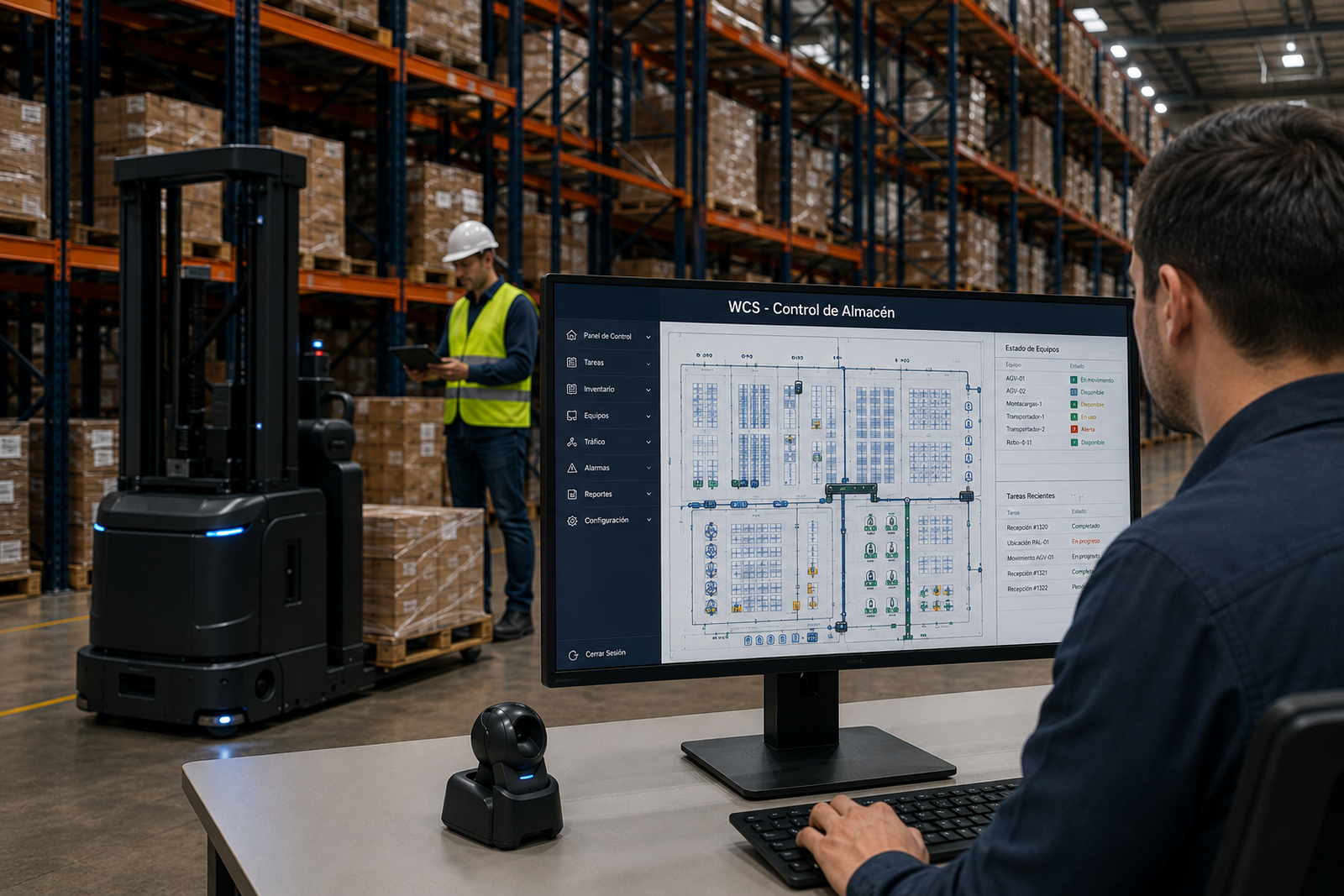
What does a WCS control?
The WCS is the layer that communicates directly with the automation machinery: it coordinates, directs and monitors the equipment so that it performs its tasks accurately and at the right time.
Main responsibilities
Connection to the automated equipment
Route management within the automated zones
Orchestration of the automation solutions
Operational flow control
Workload balancing
User interaction
Task prioritization in automated areas
Exception handling
Overall system monitoring
Benefits · Impact on your operation
It maximizes the performance and availability of your automation, avoids bottlenecks through load balancing and handles exceptions to keep the operation stable.
Ideal applications
Warehouses with automated equipment (sorters, AS/RS, stacker cranes, AGVs, picking stations) that require real-time coordination and monitoring.
Frequently asked questions
- What is a WCS?
- It is a warehouse control system that manages how automation equipment (cranes, sorters, AGVs, picking stations) performs its tasks, orchestrating, prioritizing and monitoring the operation.
- What is the difference between WMS, WES and WCS?
- The WMS manages the warehouse (planning and inventory), the WES executes and coordinates tasks in real time, and the WCS directly controls the automation equipment. Together they form the three layers of intralogistics software.
Ready to optimize your warehouse?
Talk with a DEVA expert and get a free personalized warehouse assessment.