
Double-deep racking: more capacity in the same space
Double-deep racking is an evolution of selective racking that stores two pallets deep for every front location, increasing storage density without giving up a conventional structure. It is the ideal middle-ground option when you need more capacity but want to keep much of the selectivity.
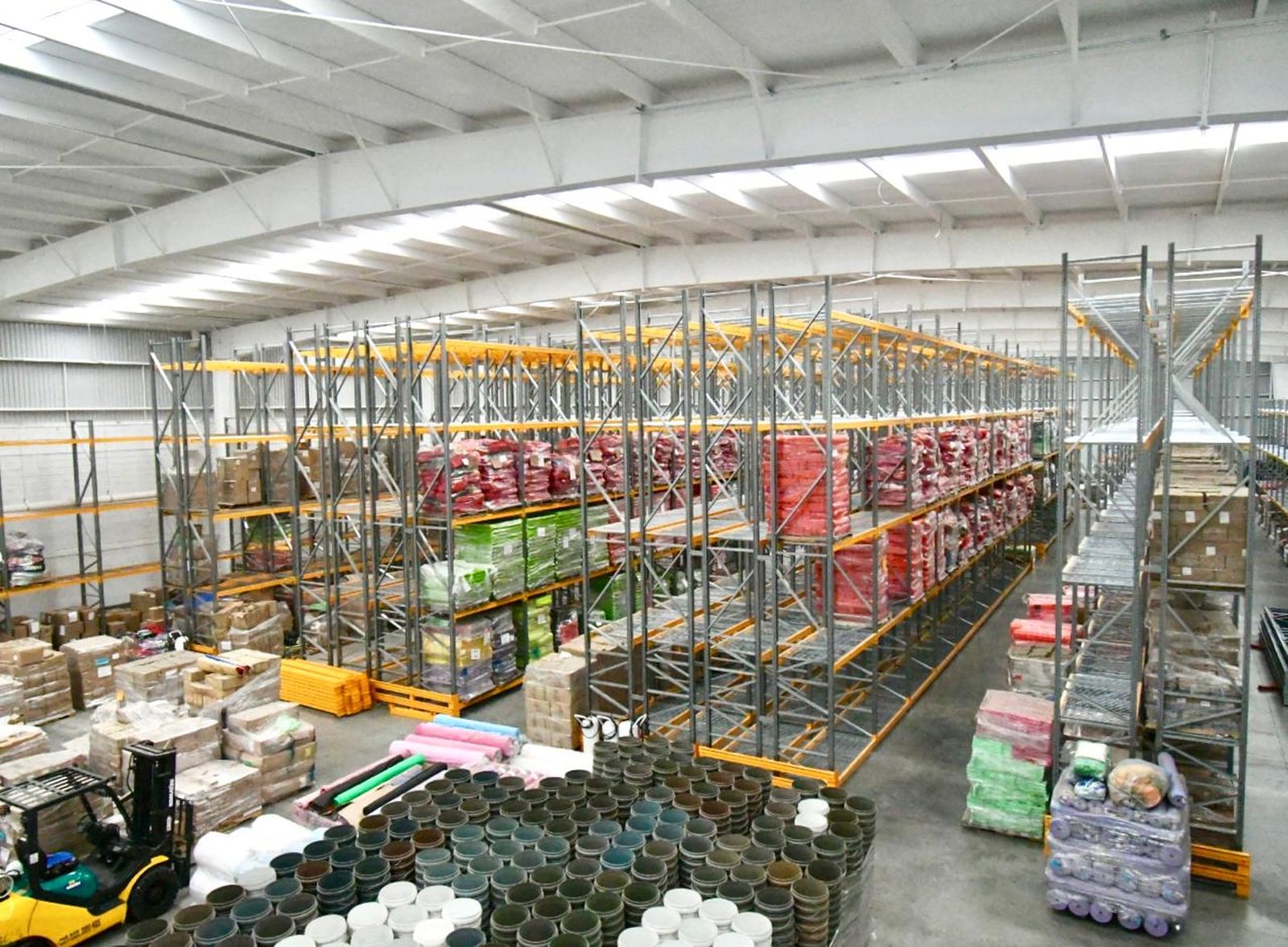
How does double-deep racking work?
Pallets are stored two positions deep. Unlike selective racking, the operator does not have direct access to every pallet, so the system is operated with forklifts equipped with telescopic or pantograph forks that can reach the second position.
Key features
Two pallets deep: increases storage density compared with selective racking.
Conventional structure: retains part of the accessibility and simplicity of selective racking.
Requires specific handling equipment: forklifts with telescopic or pantograph forks.
Space utilization: fewer aisles for the same number of pallets.
Benefits · Impact on your operation
More storage positions per square meter than selective racking while keeping the operation simple; it is a good intermediate step toward high density.
Ideal applications
Warehouses with high capacity demand and moderate turnover, and operations that already have selective racking and want to gain density.
Frequently asked questions
- What is the difference between selective racking and double-deep racking?
- Selective racking gives direct access to every pallet (100% selectivity); double-deep racking stores two pallets deep to gain density, sacrificing direct access to the rear pallet.
- Do I need a special forklift for double-deep racking?
- Yes, you need a forklift with telescopic or pantograph forks to reach the second pallet.
Ready to optimize your warehouse?
Talk with a DEVA expert and get a free personalized warehouse assessment.